
Solar Panels on Golf Buggies: Does Roof Solar Recharging Actually Work in Australia?
Solar powered golf carts: An engineering analysis of flexible monocrystalline solar roofs on golf buggies and farm carts. Daily kilowatt-hour harvest, MPPT charge controllers, and battery cycle extension.
Solar Power for Electric Carts: Practical Engineering vs Hype
Australia enjoys some of the highest solar irradiance levels in the world, with regions in Queensland, Western Australia, and New South Wales receiving over 300 days of sunshine annually. With the broad, flat surface area of a golf cart roof canopy, mounting flexible monocrystalline solar panels seems like an obvious upgrade. But does roof-mounted solar provide enough real-world energy to keep a buggy charged without plugging into the wall?
Solar Harvest Math: How Many Kilowatt-Hours Can a Canopy Generate?
A standard 4-passenger golf buggy roof measures roughly 1.8 meters long by 1.1 meters wide, providing ample surface area for a 200-watt to 350-watt flexible solar array. In Queensland, average peak sun hours range from 4.5 to 5.5 hours per day:
- •Peak Output: A 300W monocrystalline panel generates between 1,200 watt-hours (1.2kWh) and 1,500 watt-hours (1.5kWh) on a sunny day.
- •Energy Equivalence: An electric golf buggy consumes approximately 70 to 90 watt-hours per kilometer of travel.
- •Daily Free Range: 1.2kWh of solar generation translates to 13 to 17 kilometers of driving range replenished entirely by the sun.
The Role of the MPPT Boost Charge Controller
Solar panels typically output between 18V and 36V DC, which is insufficient to directly charge a 48V or 72V golf buggy battery bank. The system requires an automotive-grade Maximum Power Point Tracking (MPPT) boost controller. The MPPT controller continuously analyzes the panel current-voltage curve and steps up the voltage to 54.6V (for 48V lithium banks) with up to 98% conversion efficiency.
Off-Grid Acreage and Farm Utility Applications
Where solar buggy roofs truly shine is on expansive rural acreage, vineyards, and remote grazing properties. When a utility cart is parked beside a far boundary fence, pump shed, or cattle trough all afternoon, the solar canopy silently recharges the battery pack. Even if left unplugged for weeks, the cart will never suffer dead-battery stranding.
Battery Lifespan Extension Through Shallow Discharge
Lithium (LiFePO4) and lead-acid batteries both benefit when depth of discharge (DoD) is kept shallow. By constantly trickling charge into the pack while parked on fairways or outside community clubhouses, the solar roof reduces the depth of battery discharge during rounds, effectively extending total battery lifespan by 20% to 30%.
Conclusion: Is a Solar Roof Worth It in Australia?
If you play golf twice a week and always park your cart inside a garage, a standard 240V wall charger is sufficient. However, for acreage owners, resort operators, and off-grid property managers, a professionally installed solar roof transforms your golf buggy into a self-sustaining utility vehicle powered by clean Australian sunshine.
Where a Solar Roof Genuinely Pays Off
Solar on a buggy roof suits a specific usage pattern rather than every owner, and being honest about which one you have saves disappointment. The best case is a vehicle that sits outdoors in sun for long stretches between short trips, which describes resort, farm and estate duty accurately. There the panel trickles charge back through the idle hours and the pack rarely reaches a deep state of discharge. The weakest case is a buggy stored in a shed or garage between uses, where the panel simply never sees light and contributes nothing at all. Roof shade from trees around a property reduces output more than most people expect, since partial shading affects a panel disproportionately rather than proportionally.
Solar as Battery Preservation Rather Than Free Range
The more durable argument for a solar roof is not the range it adds but what it does to the depth of discharge. Battery life is governed heavily by how deeply a pack is drained on each cycle: shallow, frequent partial cycles are gentler than deep ones. A panel topping the pack back up during idle hours keeps the battery in that shallower band, which over years contributes to pack longevity in a way that does not appear in any daily range figure. Treat solar as maintenance charging that reduces the work the pack does rather than as a fuel replacement. Framed that way, the case is stronger and the expectations are realistic, which is the opposite of how solar accessories are usually sold.
Charging from home solar in summer
If you charge from a home solar system, the battery safety advice still applies: use the supplied charger, charge on a hard surface and keep the area clear and ventilated. Midday charging is often the hottest part of the day, so choose a shaded spot. Our summer heat guide has the details.
Frequently Asked Questions
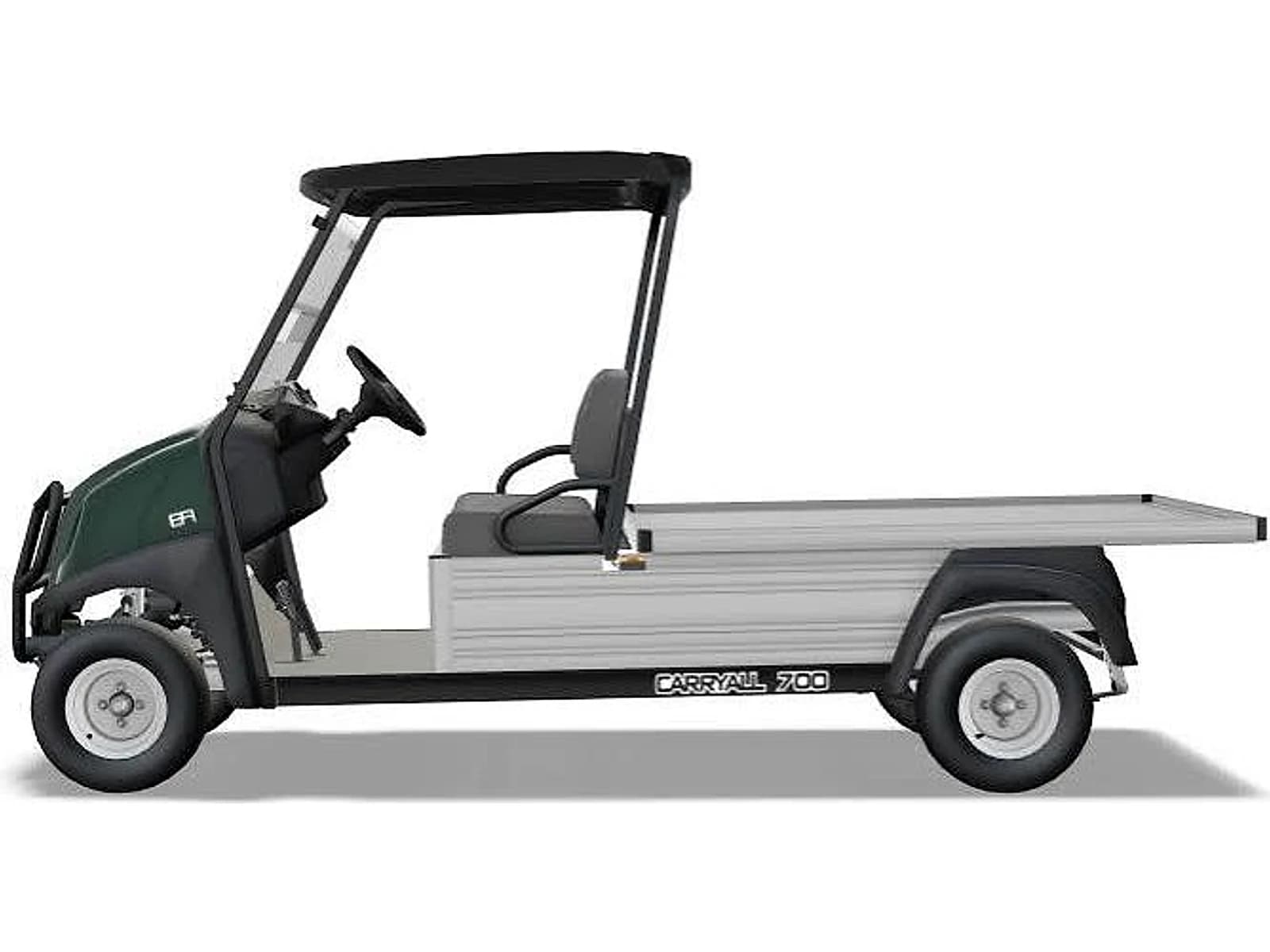
Club Car Carryall 700 Electric Utility
6-Foot Aluminum Cargo Box, 680kg Payload Capacity, Heavy-Duty Tow Hitch. Available for immediate dispatch from our Yatala QLD depot with nationwide enclosed delivery.
More Australian Golf Buggy Guides
How Far Can an Electric Golf Buggy Go on One Charge? Real-World Australian Range Testing
Data-backed range testing across 18-hole courses, gated communities, and hilly rural acreage. How lithium capacity (Ah), payload, terrain, and speed affect total kilometers.
Electric Utility Buggy Pricing in Australia: Purchase Costs, Battery Life & Running Economics
Transparent 2025 pricing analysis for electric utility buggies in Australia. Comparison of acquisition costs, 240V charging electricity, and maintenance savings.
Lithium vs Lead-Acid Golf Buggy Batteries: 10-Year Total Cost & Heat Performance in Australia
Comparing LiFePO4 lithium against flooded lead-acid and AGM packs in harsh Australian heat. Weight savings, cycle life, charging times, and true 10-year total cost of ownership.