
Electric Utility Buggy Pricing in Australia: Purchase Costs, Battery Life & Running Economics
Electric farm buggy australia: Transparent 2025 pricing analysis for electric utility buggies in Australia. Comparison of acquisition costs, 240V charging electricity, and maintenance savings.
Current Market Price Bands for Electric Utility Buggies in Australia
Whether acquiring a single workhorse for a private vineyard or deploying a 10-vehicle fleet across an educational campus, understanding current Australian market pricing is essential for sound budgeting. In 2025, commercial electric utility vehicles generally fall into three distinct price tiers based on payload capacity, chassis construction, and battery technology:
- •Entry-Level Commercial Flatbeds ($15,900 – $18,500 AUD): 300kg payload, composite cargo beds, 48V AGM or entry lithium packs, ideal for nursery and resort maintenance.
- •Mid-Range Heavy Duty Utilities ($19,500 – $22,900 AUD): 500kg payload, aluminum hydraulic dump boxes, high-capacity 105Ah LiFePO4 battery, four-wheel hydraulic disc brakes.
- •Commercial Crew & Multi-Row Haulers ($23,000 – $26,400 AUD): 6-passenger forward-facing configurations with rear luggage decks, reinforced commercial axles, dent-resistant bodywork and heavy towing capability.
Operating Cost Comparison: Electric Buggy vs Petrol/Diesel Ute
The real financial return of an electric utility buggy appears in ongoing operational expenses. A commercial diesel utility running 40km per day burns roughly 5 liters of fuel ($10 to $12 AUD daily), plus requires regular oil changes, filter replacements, and mechanical maintenance. An electric utility cart running the same distance consumes approximately 4.5 kWh of off-peak electricity, costing roughly $1.10 AUD. Over a 5-year commercial operational cycle, energy savings alone routinely exceed $12,000 AUD per vehicle.
Maintenance Longevity: Brushless AC Motors vs Internal Combustion Engines
Commercial electric carts feature sealed brushless AC induction motors with only one moving part—the rotor. There are no radiators to flush, no fan belts to snap, no fuel injectors to clog with stale fuel, and no catalytic converters to replace. Brake pad wear is drastically minimized thanks to regenerative motor braking, extending mechanical brake service intervals to 3+ years.
Tax Invoicing, Instant Asset Write-Off & Depreciation
Purchasing through Golf Buggies Express PTY LTD (ABN 28 668 598 758) ensures compliant Australian GST Tax Invoices. Eligible Australian businesses and primary producers may take advantage of current ATO capital allowance depreciation schemes, writing off equipment costs against operational revenue in the financial year of acquisition.
Commercial Payment Terms: Finance in 4 and 10% Crypto Discounts
To protect corporate cash flow, we provide flexible Finance in 4 installment programs with zero interest, allowing organizations to spread equipment costs across operating quarters. Furthermore, commercial clients settling via Bitcoin (BTC) or Tether (USDT) unlock an instant 10% cash settlement discount, generating immediate four-figure savings on multi-vehicle fleet orders.
What Actually Drives Price Differences Between Models
Two utility buggies with similar published payloads can sit thousands of dollars apart, and the gap is usually explained by components rather than badge. Battery chemistry and capacity is typically the largest single contributor, since a quality lithium pack represents a substantial share of the vehicle cost while a lead-acid bank is comparatively cheap to fit and expensive to own. Frame material is the next: aluminium costs more than steel to build and does not rust, which is why aluminium-framed models command a premium and hold resale value. Beyond those, controller amperage, brake specification, suspension design and whether the tray is aluminium or painted steel account for most of the remainder. Comparing on price alone without checking those four items is how buyers end up disappointed.
Budgeting for the Whole Life, Not the Purchase
A realistic budget for a commercial utility buggy includes three things beyond the invoice. Freight is the first, quoted against your delivery postcode rather than averaged into the price. Accessories are the second and are routinely underestimated, because the tow hitch, light kit, enclosure or seatbelts that make the vehicle fit your actual job are rarely included in the base specification. The third is the eventual battery replacement, which is a known future cost rather than an unexpected one: plan for it from the outset and the economics stay predictable. Set against those, electric drivetrains remove fuel, oil, filters and most scheduled servicing entirely, which for a vehicle running daily is where the operating saving accumulates over the years you own it.
Frequently Asked Questions
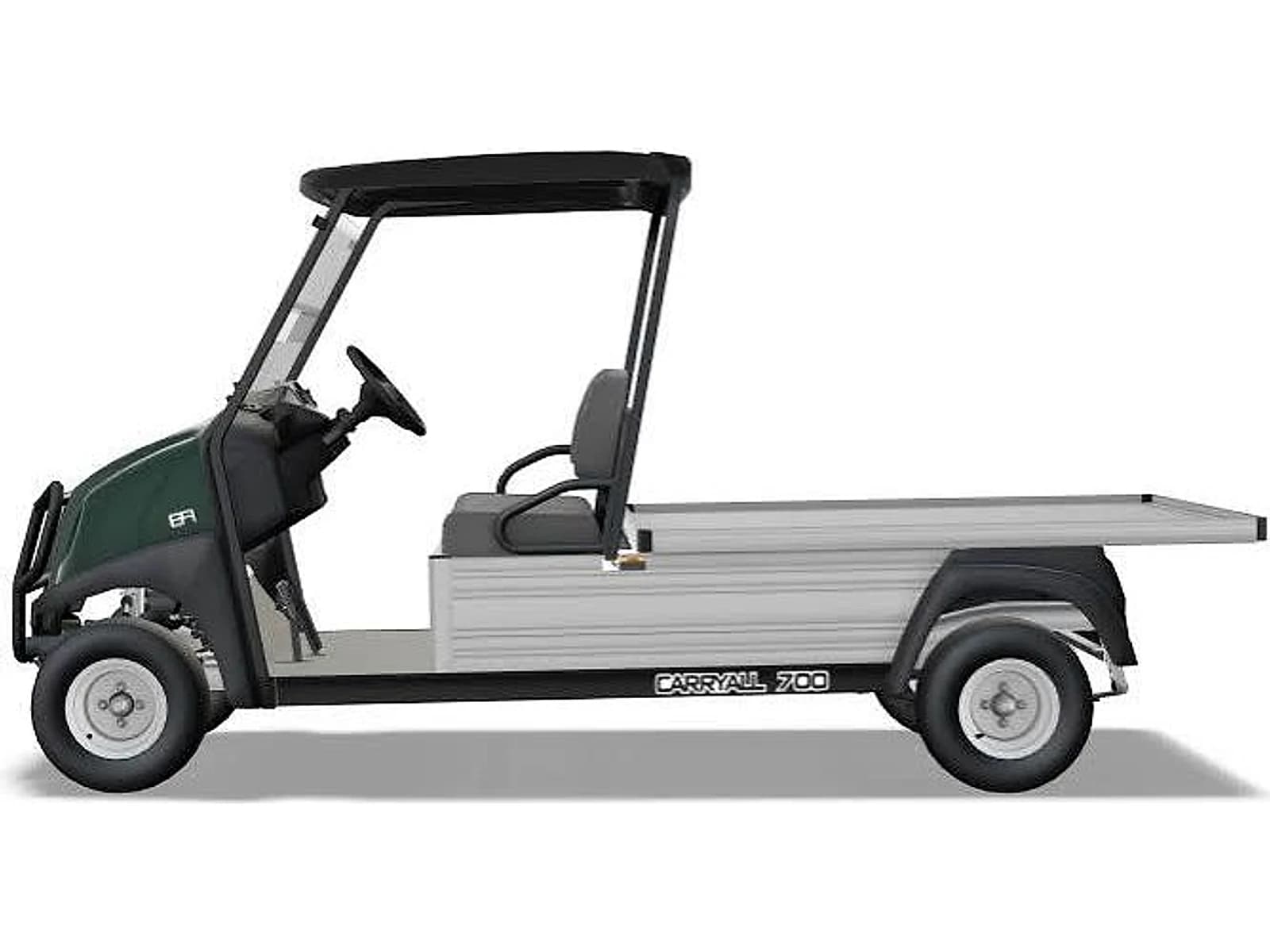
Club Car Carryall 700 Electric Utility
6-Foot Aluminum Cargo Box, 680kg Payload Capacity, Heavy-Duty Tow Hitch. Available for immediate dispatch from our Yatala QLD depot with nationwide enclosed delivery.
More Australian Golf Buggy Guides
Solar Panels on Golf Buggies: Does Roof Solar Recharging Actually Work in Australia?
An engineering analysis of flexible monocrystalline solar roofs on golf buggies and farm carts. Daily kilowatt-hour harvest, MPPT charge controllers, and battery cycle extension.
Buying a Second Hand Golf Cart in Australia: 15-Point Pre-Purchase Inspection Checklist
Avoid costly pitfalls when buying used golf carts. How to test battery cell health, detect chassis aluminum corrosion, check motor controllers, and verify serial numbers.
How to Choose the Right Electric Golf Buggy in Australia: Walk-Behind vs Ride-On Comparison
A definitive guide comparing walk-behind electric caddies, traditional 2-seaters, 4-passenger estate cruisers, and off-road 4x4 carts for Australian lifestyle and terrain.