
Lithium vs Lead-Acid Golf Buggy Batteries: The Complete Australian Buyer Guide
Comparing real-world driving range, 8-year lifespan savings, hill climb torque, and maintenance differences for Australian golf courses and acreage estates.
The Shift to Lithium-Ion in the Australian Golf and Acreage Market
Over the past three years, the Australian golf buggy market has experienced a decisive transition away from traditional flooded lead-acid and AGM batteries toward 48V and 72V Lithium Iron Phosphate (LiFePO4) systems. For acreage owners in regional Queensland and New South Wales, as well as resort operators across Victoria and Western Australia, the economic and performance advantages are no longer theoretical—they are undeniable.
Weight Reduction and Hill-Climbing Performance
A standard 48V bank composed of six 8-volt Trojan lead-acid batteries weighs approximately 180kg. In contrast, a modern integrated 48V 105Ah LiFePO4 pack weighs approximately 45kg to 50kg. Removing 130kg of dead weight transforms buggy dynamics: steering becomes lighter, braking distances are reduced, and hill-climbing torque over steep 20+ degree inclines remains constant without the voltage sag typical of lead plates.
- •Up to 135kg payload capacity recovered for passengers or cargo.
- •Consistently maintains top speed (up to 40km/h) even when battery capacity drops below 30%.
- •Eliminates harmful acid spills that corrode aluminum and steel chassis frames.
Long-Term Cost Analysis: 8-Year Total Cost of Ownership
While a lithium conversion carries a higher upfront investment ($3,200 to $4,500 AUD installed compared to $1,800 to $2,200 AUD for a replacement set of lead-acid batteries), the 8-year mathematics overwhelmingly favor lithium. In standard Australian conditions with regular golf rounds or farm inspections, lead-acid batteries degrade after 400 to 600 cycles (2 to 3 years), requiring three replacement cycles over an 8-year span ($5,400+ AUD total). High-grade LiFePO4 cells are rated for 3,500 to 5,000 cycles, retaining over 80% capacity after a decade of continuous service.
Charging Convenience and Off-Grid Solar Compatibility
Lithium battery controllers accept high charging currents without overheating. Utilizing our onboard high-frequency Australian smart chargers, an Atlas or Evolution buggy charges completely in 2.5 to 4 hours. Many of our acreage customers also connect their buggies directly to residential solar battery arrays, taking advantage of midday solar export periods for completely free, zero-emission property transport.
How to Read a Battery Specification Honestly
Comparing packs is harder than it looks because the headline numbers describe different things. Amp-hours measure charge capacity at a given voltage, so a 105Ah pack at 48V holds substantially more energy than a 105Ah pack at 24V despite the identical number, which is why comparing watt-hours is more useful than comparing amp-hours across systems. Usable capacity matters more still: lead-acid should not be discharged much below half without shortening its life, while lithium can use far more of its rated capacity, so a lithium pack of the same nominal size delivers considerably more real range. Cycle life figures also assume a specific depth of discharge, so a quoted cycle count means little without knowing the conditions it was measured under.
Heat, Australian Summers and Battery Longevity
Temperature is the variable that quietly shortens battery life in Australia more than any other. Both chemistries degrade faster when hot, but they fail differently. Lead-acid loses water accelerating through evaporation in summer heat, which is why the water-topping interval that seems manageable in winter becomes a genuine chore in January and why neglected cells fail in the hottest months. Lithium packs tolerate heat better in use but dislike being charged while very hot, and quality packs include thermal management that pauses or limits charging until the cells come down to a safe range. The practical advice for both is the same: charge in shade or a ventilated shed rather than immediately after a hot afternoon run, and avoid storing a buggy in full sun.
Frequently Asked Questions
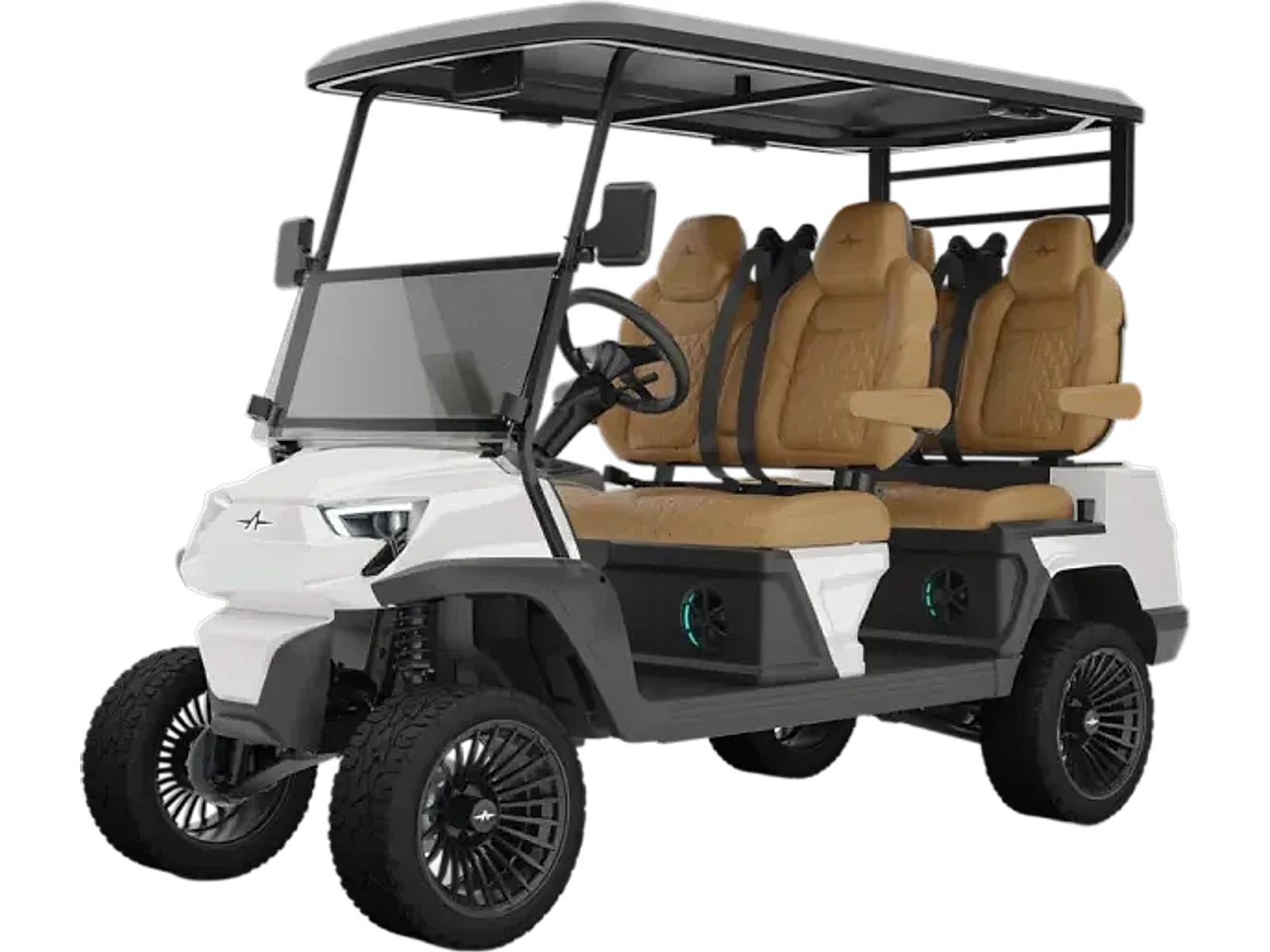
Atlas 4-Passenger Lifted Lithium Buggy
48V Lithium, 3-inch Factory Lift, Custom Leather Seats, Touchscreen Display, 14-inch Alloy Wheels. Available for immediate dispatch from our Yatala QLD depot with nationwide enclosed delivery.
More Australian Golf Buggy Guides
Golf Buggy Warranty In Australia: What's Covered, For How Long & What Voids It
What our Australian warranty actually covers on a new golf buggy, how long lithium battery cover runs, and the common causes of a voided warranty claim worth knowing before they happen.
Golf Buggy Chargers Explained: Amperage, Charge Times & Choosing The Right Charger
How golf buggy chargers actually work, why matching amperage and chemistry matters more than the price on the box, and realistic charge times on a standard Australian power point.
MGI battery and charger guide: charging time, battery life and fixes
How to charge, store and look after an MGI lithium battery: first charge, charger lights, what to do between rounds, winter storage and when to stop and call a repair centre.