
Golf Buggy Etiquette & Course Rules Every Australian Golfer Should Know
Golf buggy etiquette rules: The unwritten and written rules of driving a golf buggy on an Australian course: cart path rules, the 90-degree rule, staying off greens and tees, and reading the specific course’s own signage.
Rules Vary By Course, So Check Before You Assume
The single most important etiquette habit is checking that specific course's rules on the day, rather than assuming the rules from your home course apply everywhere. Turf condition, recent rain and time of year all affect what a course allows, and many clubs post buggy-specific signage or 'cart path only' notices that change with conditions. Five minutes at the pro shop before you set off avoids the most common source of buggy etiquette mistakes.
The 90-Degree Rule, Explained
Widely used across Australian courses, the 90-degree rule asks buggy drivers to stay on the cart path until reaching a point level with their ball, then approach the ball directly at a 90-degree angle from the path rather than driving up the fairway toward it. It protects the fairway turf closest to the green from repeated buggy traffic, which compacts and wears faster than turf further from the hole.
Cart-Path-Only Days And Why They Happen
Courses call cart-path-only days after heavy rain or during turf recovery periods, when driving on grass risks leaving ruts that take weeks to repair. It’s a genuine turf-protection measure rather than an inconvenience aimed at buggy users, and ignoring it can leave visible, lasting damage the course then has to repair at cost — which is usually reflected back in green fees for everyone.
- •Always stay on the path when a cart-path-only notice is posted
- •Never drive between a bunker and the green — this strip is almost universally off-limits
- •Never cross a tee box, regardless of how empty the course looks
Greens, Tees And The Areas That Are Always Off-Limits
Regardless of a specific course's local rules, buggies should never approach closer than the marked distance to a green — often indicated by a sign or a painted line — and should never cross a tee box under any circumstances. These two rules are close to universal across Australian courses because greens and tees are the most delicate, expensive-to-maintain turf on the property, and damage there is highly visible to every golfer who plays the hole afterward.
Sharing The Course With Other Groups
Basic buggy courtesy extends beyond turf care: keep noise down near other groups mid-swing, don’t drive close enough to another player’s line to distract them, and give right of way to groups playing through if your own group is searching for a lost ball. None of this is written in any rulebook, but it’s the difference between being a welcome buggy user on a course and one other golfers quietly avoid playing near.
Bringing Your Own Buggy To A Course
If you own a private buggy and plan to bring it to a club course rather than use the club's own fleet, check with the pro shop first — many clubs have specific rules, and sometimes fees, for private buggies, separate from their general etiquette rules. This is worth confirming before your first visit rather than discovering it at the gate.
Frequently Asked Questions
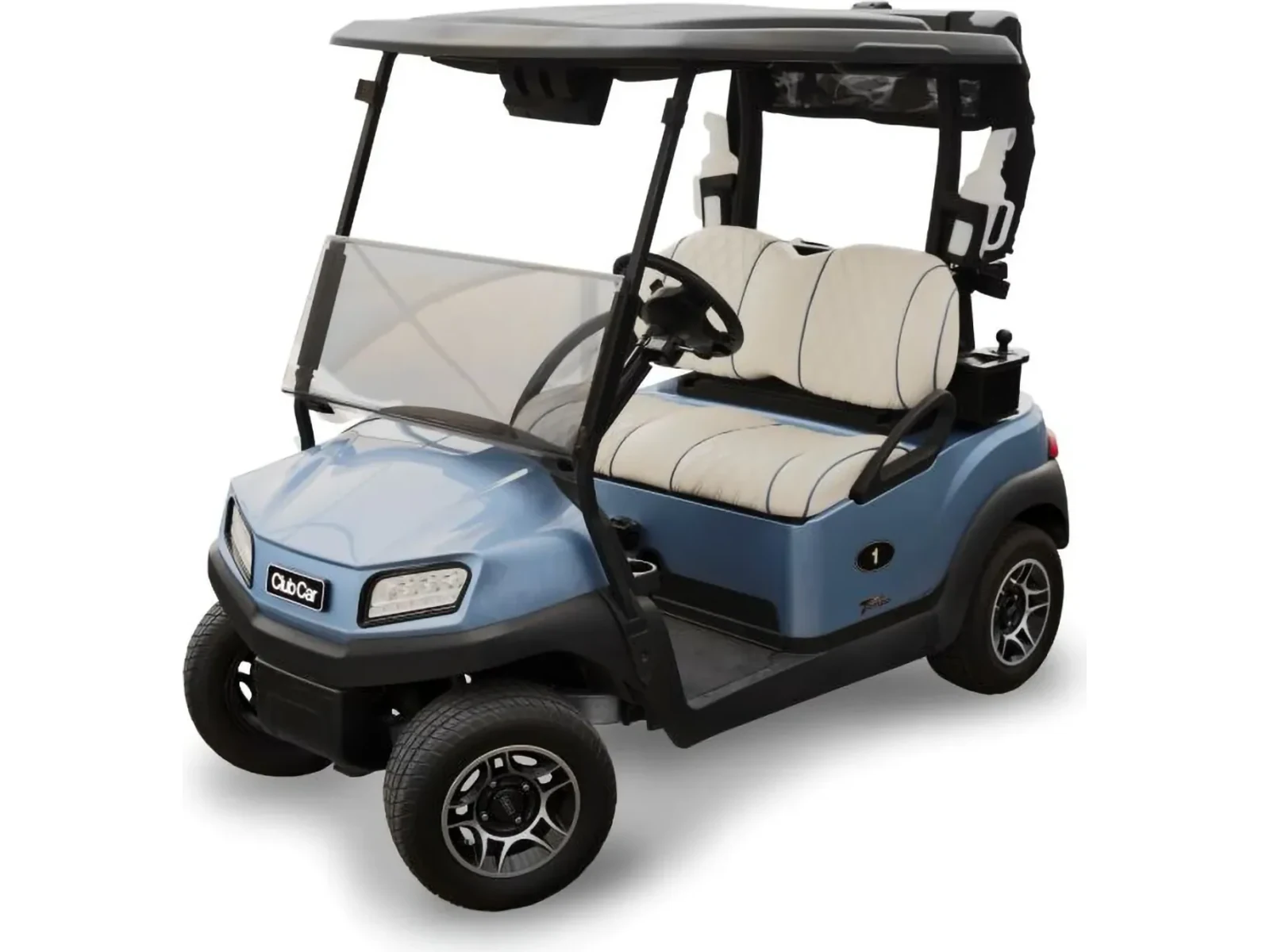
Club Car Tempo Lithium (2025 Model)
Monaco Drive System, Rust-Proof Aluminum Frame, Automotive-Style Dashboard. Available for immediate dispatch from our Yatala QLD depot with nationwide enclosed delivery.
More Australian Golf Buggy Guides
Lithium vs Lead-Acid Golf Buggy Batteries: The Complete Australian Buyer Guide
Comparing real-world driving range, 8-year lifespan savings, hill climb torque, and maintenance differences for Australian golf courses and acreage estates.
Buying a 4-Seater Golf Buggy in Australia: Road Rules, Acreage & Resort Access
Everything you need to know before buying a 4-passenger golf buggy in QLD, NSW, and VIC — conditional registration, community estate bylaws, and safety specs.
Lifted 4x4 Off-Road Golf Buggies: Acreage, Farm & Muddy Incline Performance
How 400A AC motors, heavy-duty coilover suspension, hydraulic disc brakes, and all-terrain tyres tackle steep paddocks and rugged rural terrain.