
Motorised vs Push Golf Buggies: Which Improves Stamina, Heart Rate & Your Handicap?
Push or electric golf trolley: Sports science insights into how motorized golf buggies reduce shoulder fatigue, preserve back health, and save 2–3 shots per round on back-nine greens.
The Physical Toll of Pushing 15kg of Clubs Over 10,000 Steps
An average round of 18 holes across Australian golf courses covers 7 to 9 kilometers, translating to 10,000 to 13,000 steps. While carrying a bag places excessive vertical compression on the lumbar spine and shoulders, pushing a manual cart up 15-degree hills requires substantial upper-body exertion. On undulating terrain, pushing 15kg to 18kg of bag and equipment forces the heart rate into anaerobic zones, causing rapid muscle fatigue.
The Back-Nine Fatigue Phenomenon: Why Shots Are Lost on Holes 14 to 18
Sports biomechanics studies reveal a strong correlation between elevated heart rates, muscular fatigue, and degraded putting performance. When golfers push a cart up a steep fairway incline directly before hitting an approach shot, forearm trembling, elevated breathing rates, and lactic acid build-up make steady putting strokes significantly harder. Transitioning to a motorized golf buggy keeps your cardiovascular output in a steady aerobic fat-burning zone (95–115 BPM), allowing calm, confident putting on the closing stretch.
- •Preserves arm, wrist, and shoulder stability for consistent golf swing mechanics.
- •Eliminates lower-back hunching and knee strain when navigating steep fairway mounds.
- •Maintains mental sharpness and course management decisions during 4-hour rounds in summer heat.
Walking Alongside an Electric Buggy: The Health Sweet Spot
Riding in a sit-down cart burns approximately 400 to 500 calories per round, while walking alongside an electric walk-behind buggy burns 850 to 1,150 calories—nearly identical to pushing a manual cart, but without the joint impact. It offers the ideal balance: you gain all the cardiovascular and metabolic benefits of brisk walking while keeping your body fresh and free of injury.
Variable Speed Dials and Downhill Speed Control
Modern motorized buggies feature stepless speed dials ranging from 1.5km/h to 8.5km/h, allowing you to match the cart pace exactly to your natural stride. When descending steep cart paths, automated electronic motor braking prevents the cart from pulling away, eliminating the jarring knee impacts required to brake a heavy manual push cart downhill.
Longevity in the Game: Playing Pain-Free Into Your 70s and 80s
At Golf Buggies Express, dozens of veteran golfers tell us that switching to an electric motorized buggy added years to their playing lives. If hip, knee, or back stiffness has begun to diminish your enjoyment of walking the course, a motorized walk-behind buggy is one of the most effective equipment upgrades you can make.
Walking Still Counts: What Changes and What Does Not
A reasonable concern about moving to a motorised buggy is that it removes the exercise that made walking the course worthwhile. It does not, and the distinction matters. You still walk the full distance of the round, which is where the large majority of the cardiovascular and step-count benefit comes from. What disappears is the load carried and pushed, which is the component most associated with lower back and shoulder strain rather than with fitness gains. For most golfers the result is the same walking distance with less accumulated fatigue, which is precisely the trade people are looking for. If your goal is deliberate resistance work, a push buggy provides it, but the benefit should be weighed against how it affects your play and your joints.
Playing With an Existing Injury or Condition
For golfers managing a back, shoulder, hip or knee problem, the equipment decision is genuinely medical rather than merely a preference, and it is worth discussing with your physiotherapist or doctor rather than deciding from an article. What we can offer is the practical mechanics. Pushing a loaded buggy involves sustained forward force through the shoulders and lower back, repeated across several kilometres. A motorised buggy removes that force entirely while preserving the walking. A remote or follow-mode buggy additionally removes the need to keep a hand on the handle, which matters for shoulder conditions and for anyone who benefits from a natural walking arm swing. Which of those distinctions applies to your situation is a question for the person treating you.
Frequently Asked Questions
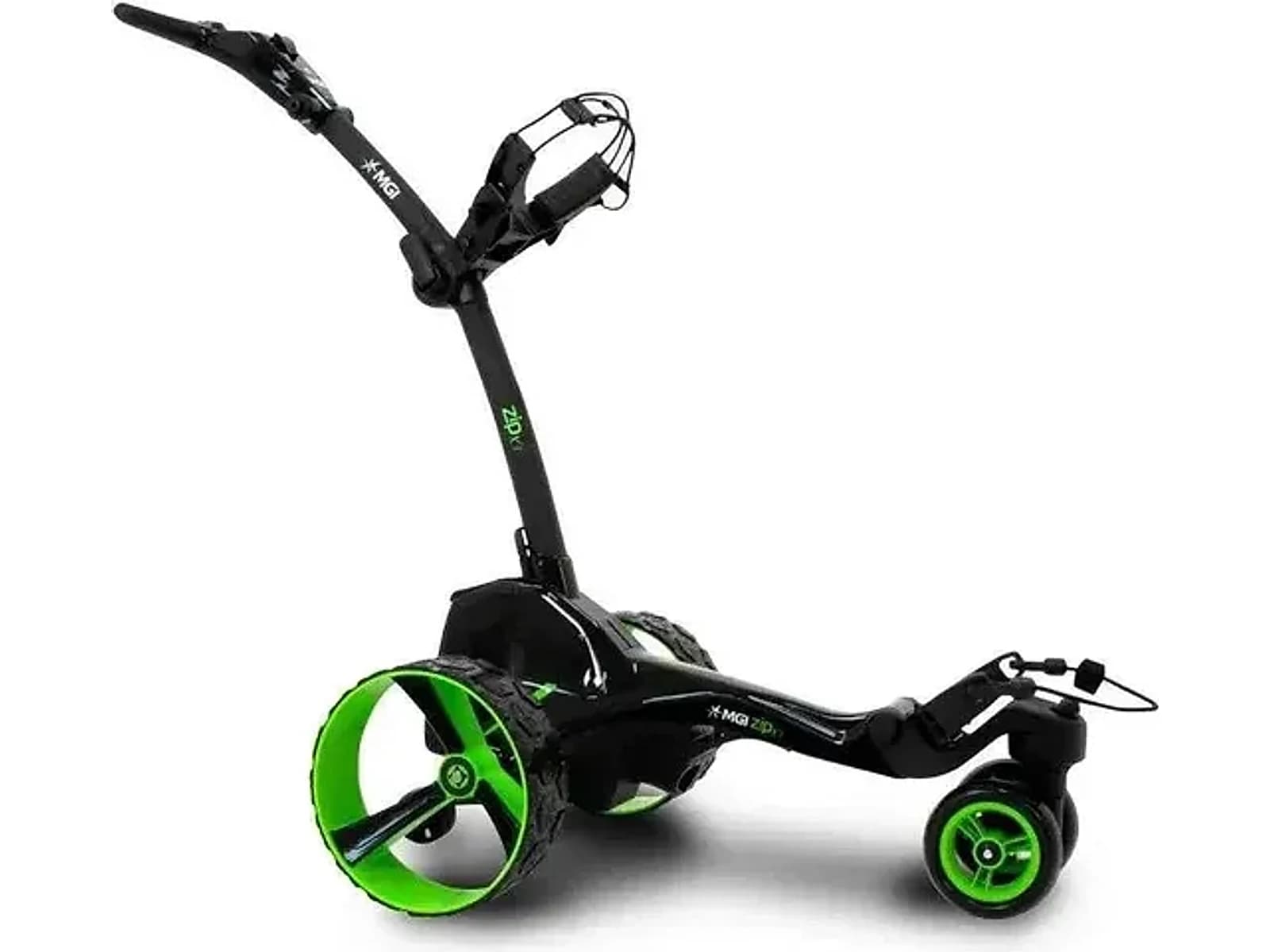
MGI 2024 Zip X5 36-Hole Lithium
Downhill Speed Control, Electronic Park Brake, Distance Control Function. Available for immediate dispatch from our Yatala QLD depot with nationwide enclosed delivery.
More Australian Golf Buggy Guides
Best Golf Trolley in Australia: Push vs Motorized vs Remote Control Comprehensive Evaluation
Find your ideal walking companion on Australian fairways. Detailed comparison of manual push trolleys, motorized walkers, and hands-free remote caddies.
Best Push Golf Buggy in Australia: 3-Wheel vs 4-Wheel Stability & Performance Review
Comparing 3-wheel swivel agility against 4-wheel slope stability. Discover the best push golf buggies for Australian golfers seeking durability and boot portability.
Remote Control Golf Buggies in Australia: The Ultimate Buyer & Feature Guide
Explore how gyroscopic straight-tracking, twin 230W motors, downhill speed braking, and lithium range make remote golf buggies the top choice for Aussie golfers.